If San Francisco gives you energy but not always exhale, Seacliff offers a different rhythm. For many Bay Area buyers, the appeal is not simply owning near the water. It is finding a place where mornings begin with bluff views, afternoons unfold at the beach, and weekends feel distinctly removed from city pace. If you are considering Seacliff as a beach retreat, this guide will help you weigh the lifestyle, property types, and due diligence that matter most. Let’s dive in.
Why Seacliff Appeals to San Francisco Buyers
Seacliff is part of the unincorporated Aptos area in Santa Cruz County, alongside Rio Del Mar and Seascape. Official local sources describe it as a bluff-top coastal neighborhood overlooking Monterey Bay, with a historic state beach and a village feel rather than an urban street grid.
That distinction matters if you are coming from San Francisco. In the city, convenience often means density, transit access, and constant activity. In Seacliff, the experience is more about shoreline access, open sky, and a slower daily pattern shaped by Highway 1, State Park Drive, and neighborhood-scale amenities.
For a buyer seeking a retreat, this can feel like a true reset. You are not trying to recreate city living by the beach. You are choosing a different kind of place altogether.
What Daily Life Looks Like in Seacliff
Seacliff centers on a coastal lifestyle. Seacliff State Beach offers a mile-long shoreline, picnic areas, a visitor center, a paved promenade, and access for surf and fishing. Nearby Aptos also adds access to the Forest of Nisene Marks State Park, with about 30 miles of trails across 10,000 acres.
Closer to home, Seacliff Village County Park adds useful everyday amenities, including a playground, picnic area, skate park, vista point, restroom, and little free library. These details may seem small at first glance, but they help create a neighborhood that feels livable, not just scenic.
If you are used to San Francisco’s scale, this shift is significant. The U.S. Census Bureau lists San Francisco at 873,965 residents, while local transit there reaches across the city. Seacliff is much smaller and more localized, so your routine is likely to involve more driving, more walking along the coast, and more planning around weather and weekend timing.
Choosing the Right Seacliff Property
In Seacliff, the most important decision is often not square footage or even bedroom count. It is how the home relates to the coast.
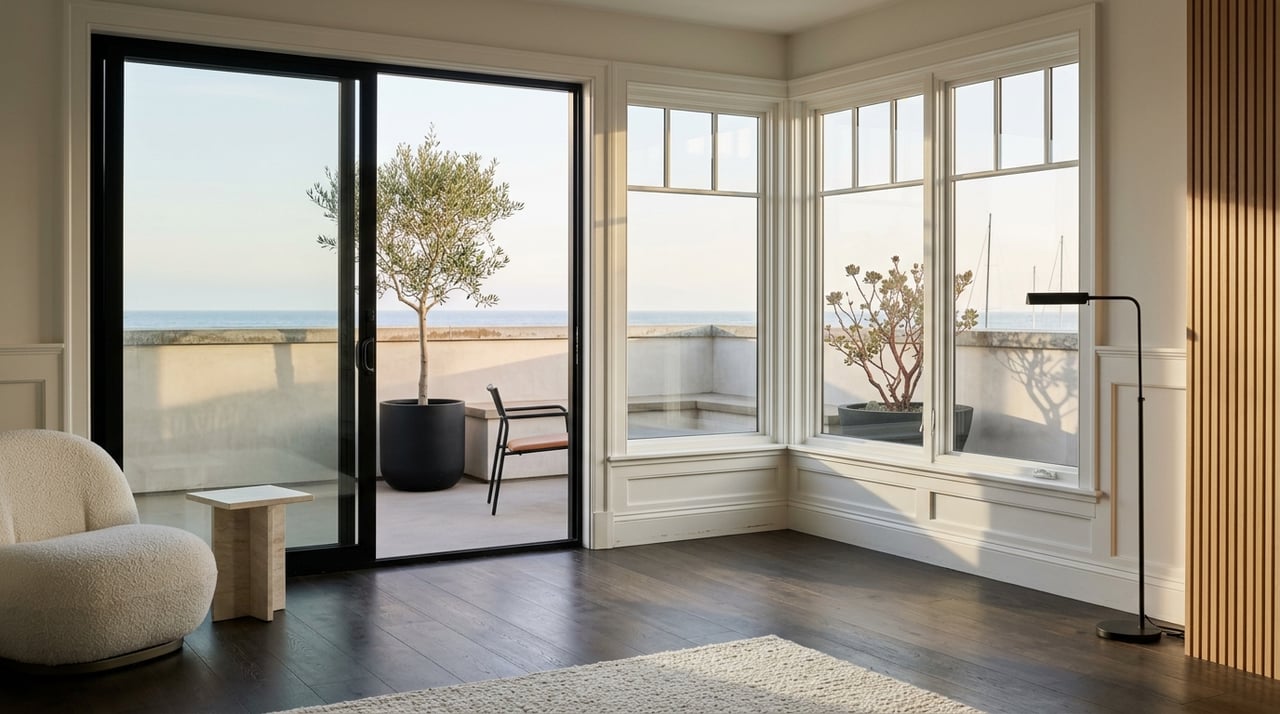
Because the neighborhood sits on bluffs above Monterey Bay, buyers should pay close attention to orientation, elevation, and whether the main living areas open toward the water. Ocean-facing upper floors and decks are the homes most likely to capture broad views and sunset light.
This is where a retreat purchase becomes personal. Some buyers want a front-row coastal setting with direct visual connection to the bay. Others prefer a position slightly farther inland if it offers easier upkeep, more privacy, or a different price point.
Bluff-Top vs. Inland Position
A bluff-top home may offer the strongest visual drama and a more immediate relationship to the coast. The trade-off is that these properties often require more careful review around permits, hazards, and long-term resilience.
A home farther inland may still deliver the Seacliff lifestyle with easier access to the beach and village amenities, while reducing some exposure-related concerns. If your goal is a flexible weekend escape rather than a statement waterfront perch, this can be a smart balance.
Full Views vs. Filtered Views
Not every Seacliff property will offer the same visual experience. Some homes may have direct bay exposure, while others offer partial, filtered, or upper-level views.
For many buyers, the difference between a pleasant beach house and an extraordinary retreat comes down to where you spend most of your time. A living room, kitchen, or primary suite that opens toward the water can matter more than having a view from only one secondary room.
Main-Level Flow Matters
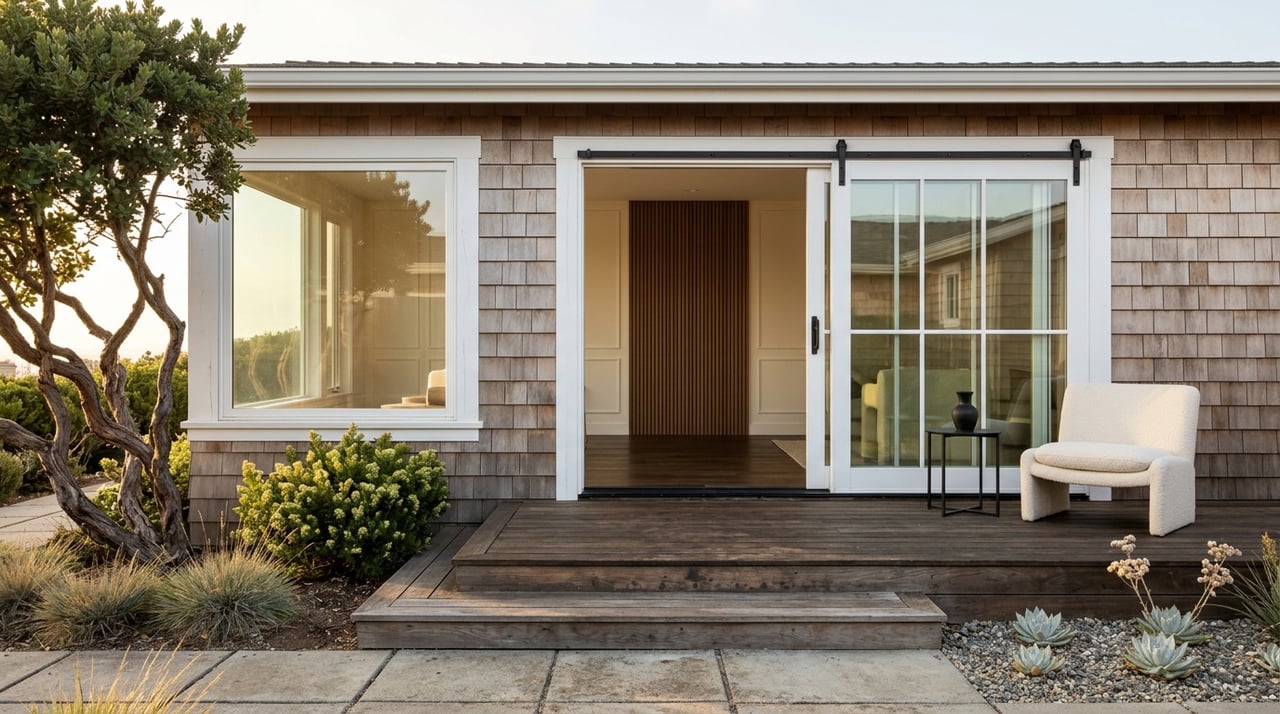
Beach living is often about movement, not formality. A retreat works best when the main level connects easily to decks, patios, or protected outdoor areas and supports a natural indoor-outdoor rhythm.
When you tour homes, pay attention to how you would actually arrive from the beach, rinse off, store gear, and settle into the living spaces. In a coastal setting, practical flow often shapes enjoyment as much as design does.
What Property Types You May Find
Seacliff should not be viewed as a one-format beach market. Broader Aptos planning documents show a mix of housing forms in the corridor, including detached homes, attached homes, flats, lofts, townhomes, and mixed-use residential possibilities in surrounding village contexts.
That means your options may be broader than expected. Depending on your goals, a detached home may suit buyers who want greater privacy and guest flexibility, while an attached or more compact property may appeal if you want a lower-maintenance retreat.
For San Francisco buyers, this can be familiar territory. Just as city buyers weigh full-service condominiums against view homes or classic single-family residences, Seacliff buyers should think in terms of lifestyle fit rather than assume one ideal beach-house template.
Features That Make a Better Beach Retreat
In Seacliff, livability often matters more than raw size. The strongest retreat properties tend to support the way you actually live near the coast.
Look for features such as:
- Protected outdoor rooms or decks
- Easy sand-to-shower circulation
- Storage for boards, bikes, and beach gear
- Flexible guest space
- Upper-level living areas that take advantage of light and views
- Layouts that feel comfortable for both quiet weekends and hosting
These details support the real appeal of Seacliff, which is the beach, the promenade, nearby village amenities, and easy access to outdoor recreation. A well-chosen retreat should feel effortless when you arrive.
Due Diligence Is Part of the Decision
A beautiful coastal home should also be a carefully evaluated one. In Seacliff, due diligence is not a final box to check. It should begin early.
Santa Cruz County places Seacliff within its coastal regulation framework. The county states that the Coastal Zone extends to Highway 1 from Capitola south to the county line, and development can include construction, demolition, grading, subdivisions, and changes in land use.
Within that zone, the Seacliff Beach Area is one of seven special communities subject to special design standards. Projects near the beach or within 50 feet of a coastal bluff may require a Coastal Development Permit, even when the work appears relatively minor.
Remodels and Future Plans
If you are buying with renovation in mind, this matters immediately. The key question is often not whether a property can be owned or improved, but what can be reasonably built, remodeled, or protected under current local rules and site-specific hazard review.
That makes early planning especially important if you are comparing two homes with similar views but different long-term potential. A property that feels less dramatic on day one may offer more flexibility over time.
Flood, Tsunami, and Sea Level Review
Flood, tsunami, and sea level rise review should be part of your first evaluation. Santa Cruz County states that projects in a Special Flood Hazard Area must comply with county, building, and FEMA rules, and the county directs buyers to FEMA mapping to determine flood zone status.
The California Geological Survey maintains tsunami hazard maps for Santa Cruz County. The California Coastal Commission also continues to note that sea level rise can increase flooding, inundation, wave impacts, and erosion.
For a retreat buyer, this is not meant to discourage ownership. It is meant to frame the coastal purchase clearly, with the same sophistication you would apply to architecture, design, and long-term value.
Storm Recovery Context
The recent condition of Seacliff State Beach underscores that coastal resilience is real, not theoretical. As of July 5, 2026, the State Parks page reports that the campground remains closed due to extensive storm damage from early January 2023, and the damaged pier was removed.
That does not erase Seacliff’s appeal. It simply reminds you that the beauty of the coastline comes with maintenance, environmental review, and a need for realistic expectations.
Guest Space, ADUs, and Parking
If you are hoping for guest quarters, multigenerational use, or a flexible long-term arrangement, Santa Cruz County’s ADU rules deserve careful review. ADUs are allowed on residential parcels, but in the Seacliff, Aptos, and La Selva designated area, a new-construction ADU requires one parking space with no exceptions.
The county also states that ADU or JADU rentals must be longer than 30 days. In addition, parcels on septic may require upgrades.
For buyers coming from San Francisco, where flexibility often drives value, these details can influence which property feels right. A home with enough existing space may be more practical than one that depends on future expansion.
How to Decide if Seacliff Fits You
The right Seacliff retreat is less about chasing a postcard image and more about matching the place to your habits. If you want a setting that feels village-scaled, beach-centered, and visually calming, Seacliff can offer a compelling alternative to city intensity.
If, however, you want immediate urban convenience, broad transit access, and constant variety within a few blocks, the adjustment may feel larger than expected. This is a lifestyle decision as much as a real estate one.
The best purchases here tend to come from clarity. Know whether you value dramatic views, simpler maintenance, guest flexibility, future remodeling potential, or easy beach access most, then evaluate each property through that lens.
A well-chosen Seacliff retreat can become more than a second address. It can become the place where your schedule softens, your perspective widens, and home feels tied to the horizon.
If you are weighing a coastal purchase from the perspective of a San Francisco luxury buyer, Tania Toubba offers discreet, high-touch guidance shaped by design sensibility, strategic evaluation, and a private consultation approach.
FAQs
What is Seacliff in Santa Cruz County like for San Francisco buyers?
- Seacliff is a bluff-top coastal neighborhood in the unincorporated Aptos area with a village feel, beach access, and a slower pace than San Francisco’s denser urban setting.
What should you prioritize when buying a Seacliff beach retreat?
- Focus on how the home relates to the coast, including bluff-top versus inland position, view orientation, upper-level exposure, and indoor-outdoor flow.
Are there different property types in the Seacliff area?
- Yes. Buyers may encounter detached homes, attached homes, townhomes, flats, lofts, and other residential forms within the broader Aptos corridor.
Do Seacliff properties require special permit review?
- They can. Santa Cruz County states that projects in the Coastal Zone, especially near the beach or within 50 feet of a coastal bluff, may require a Coastal Development Permit and must follow local coastal rules.
Should you check flood and tsunami conditions before buying in Seacliff?
- Yes. Santa Cruz County says flood-zone compliance may apply in Special Flood Hazard Areas, and tsunami hazard maps for Santa Cruz County are maintained by the California Geological Survey.
Can you add an ADU to a Seacliff property?
- Possibly, but county rules apply. In the Seacliff, Aptos, and La Selva designated area, a new-construction ADU requires one parking space, and ADU or JADU rentals must be longer than 30 days.